
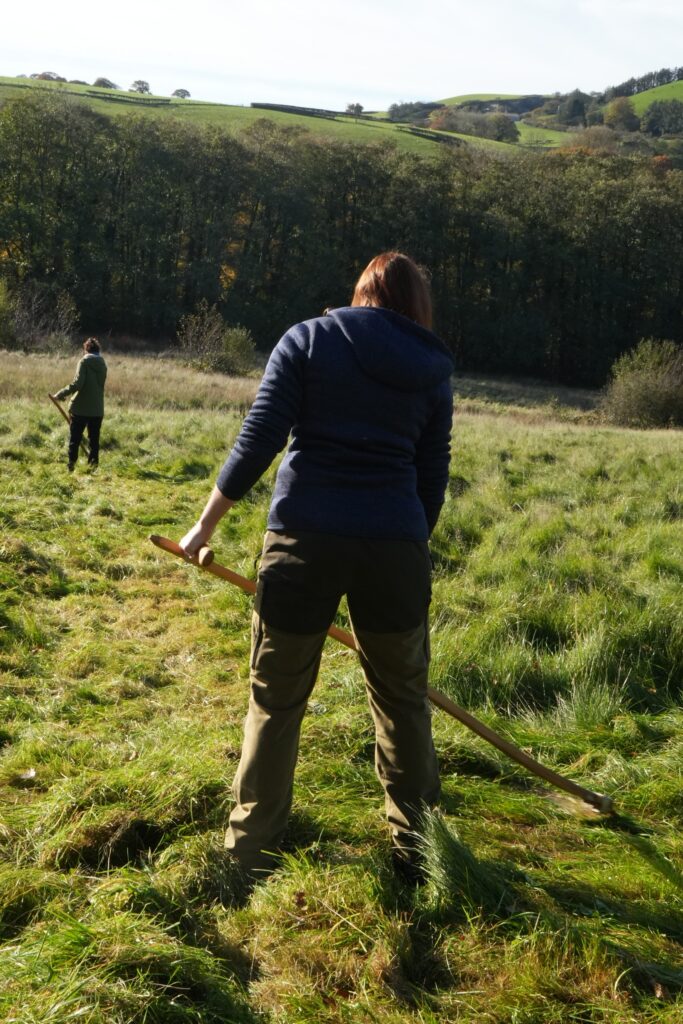
As part of preparations for the upcoming curlew breeding season, the GWCT Wales team recently spent a day in the field testing equipment, refining techniques and gathering valuable information that will help maximise nest protection.
A key focus of the day was testing different methods of vegetation management beneath electric fencing. Electric strimmers were compared with traditional scythes for cutting grass under fence lines. While both methods proved effective, scythes were preferred due to their quieter operation, reducing disturbance to wildlife, particularly breeding and nesting birds. They also provided a cleaner cut and avoided leaving grass clippings tangled within the fencing.
The team also tested electric fencing configurations designed to protect vulnerable curlew nests from ground predators. Two circular and two square fence designs were erected and assessed, each incorporating four strands of electric fencing. These trials are helping us identify the most practical and effective approach so that, when the breeding season arrives, protective fencing can be deployed quickly and efficiently around vulnerable nesting sites.
With timing often playing a crucial role in nest protection, the team also measured how long it took to erect the various fence designs. By refining the process now, we can ensure that valuable time is saved when active curlew nests need safeguarding in the spring.
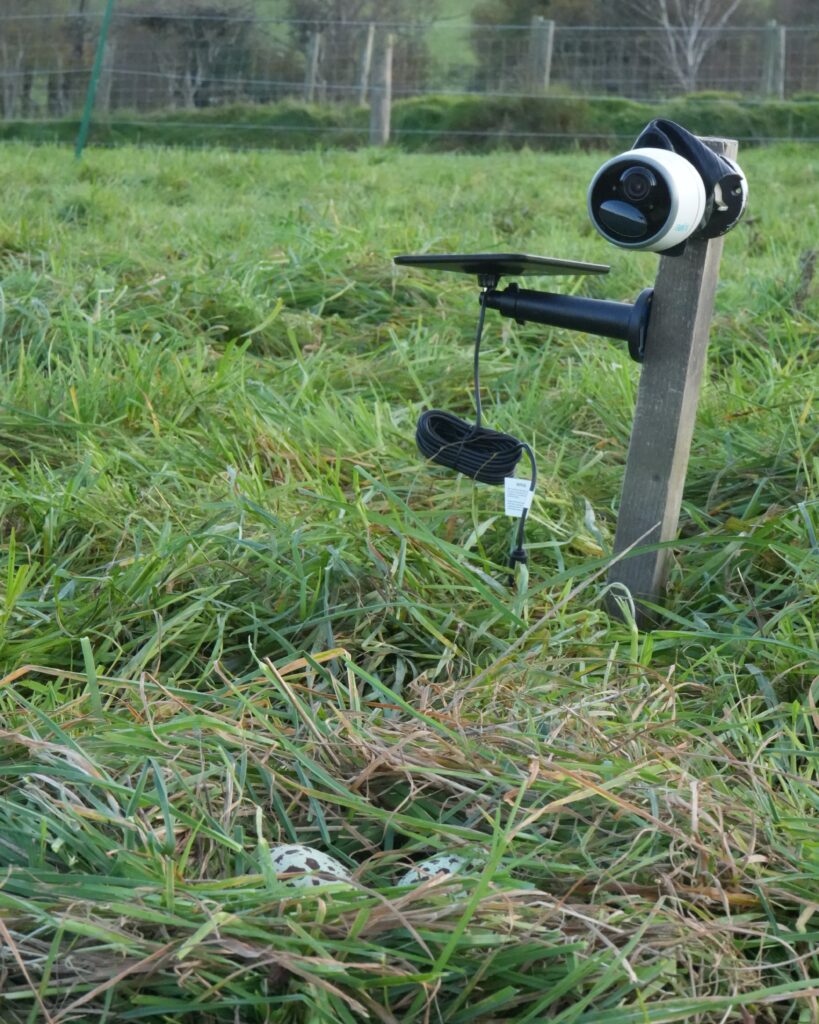
Monitoring remains an important element of the project, and several cameras were installed across the site. For each dummy nest, one camera has been positioned to monitor activity in the sky, helping record the presence of avian predators. Another focuses on wooden decoy eggs to identify which predators investigate potential nesting sites, while additional cameras have been placed around the field to provide a broader picture of wildlife activity and predator movements.
Every breeding season presents new challenges, and these practical trials are helping us build on previous experience and improve our conservation efforts. By testing methods, refining techniques and better understanding predator behaviour, we are working to give curlews the best possible chance of successfully raising their young.